Description
The Ancient Village of Grottammare
Journey through the small medieval villages of the Piceno area, perched on green hills and steeped in history.
A few kilometers north of San Benedetto del Tronto and connected by a long cycle path, we find Grottammare, known as the "Pearl of the Adriatic." Its Antico Incasato is not only a panoramic balcony, but a concentration of art and tradition that defies time.
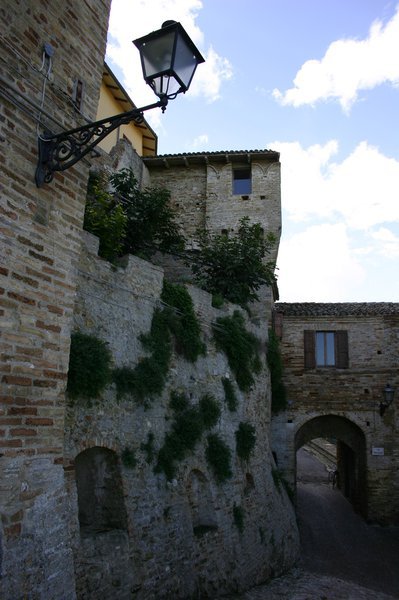
The ancient village of the city of Grottammare sits on a hill overlooking the modern city, immersed in the greenery of an ancient pine forest. Grottammare Castle was likely built in the 10th century and later strengthened (in the 12th century) when it became part of the possessions of the city of Fermo. Of the old castle that once stood atop the hill, only a few sections of walls and the bases of the towers remain, immersed in a lush pine forest.
The castle was accessed through three gates: Porta Marina (not far from the “Battle Tower”) to the east, Porta Castello to the north (which leads to the “Oasi dei Monti”), and Porta Maggiore to the south (demolished in the early 1900s).
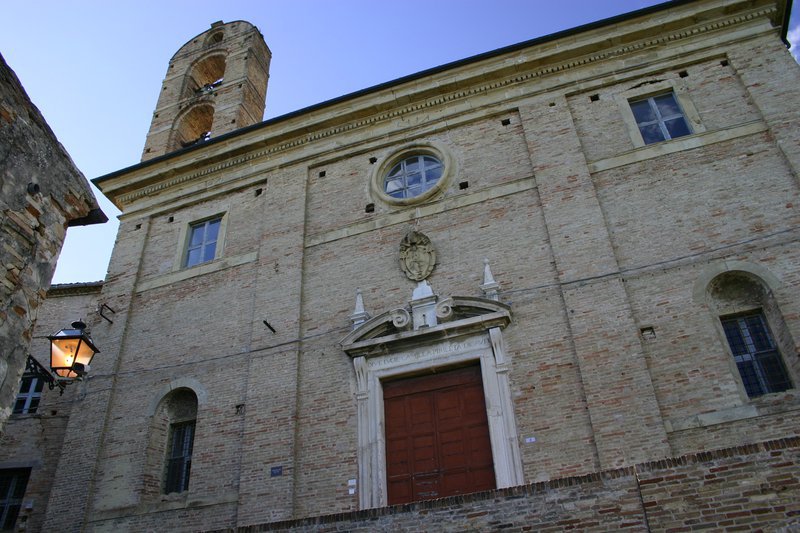
Entering from the south side of the village, we immediately find ourselves in Piazza Peretti, overlooked by the Clock Tower, the Teatro dell’Arancio, on whose façade we can see the statue of Sixtus V, and the Church of San Giovanni. On the east side of the square, a “loggia” in Piazza Peretti offers a beautiful view of the city and the coast. Continuing into the village, we find the Church of Santa Lucia, built at the request of Pope Sixtus V.